DTF Film for Rhinestone Application: FCOLOR New Film Solves the Stone Loss Problem
- Share
- Issue Time
- Aug 25,2026
Summary
FCOLOR developed a new DTF film that holds hot-fix rhinestones firmly on transferred patterns. Standard DTF film causes rhinestone loss after 5 to 10 washes. The new film micro-roughens the transferred surface for mechanical adhesive interlock, reaching 95-plus percent stone retention after 20 wash cycles.
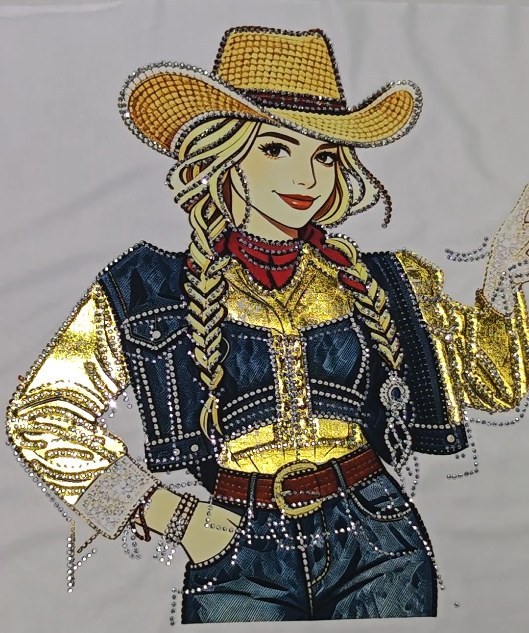
Garment decorators who combine DTF printing with rhinestone application have run into the same wall for years: the stones fall off. You print a full-color design on DTF film, transfer it to a cotton tee, then apply hot-fix rhinestones on top of the printed area. After one wash cycle, the stones start popping off the printed surface while staying firmly bonded to the bare fabric around it. That failure happens on the film, not on the fabric. FCOLOR engineered a new DTF film that holds rhinestones in place on transferred patterns, and this article breaks down why the problem exists and how the new film solves it.
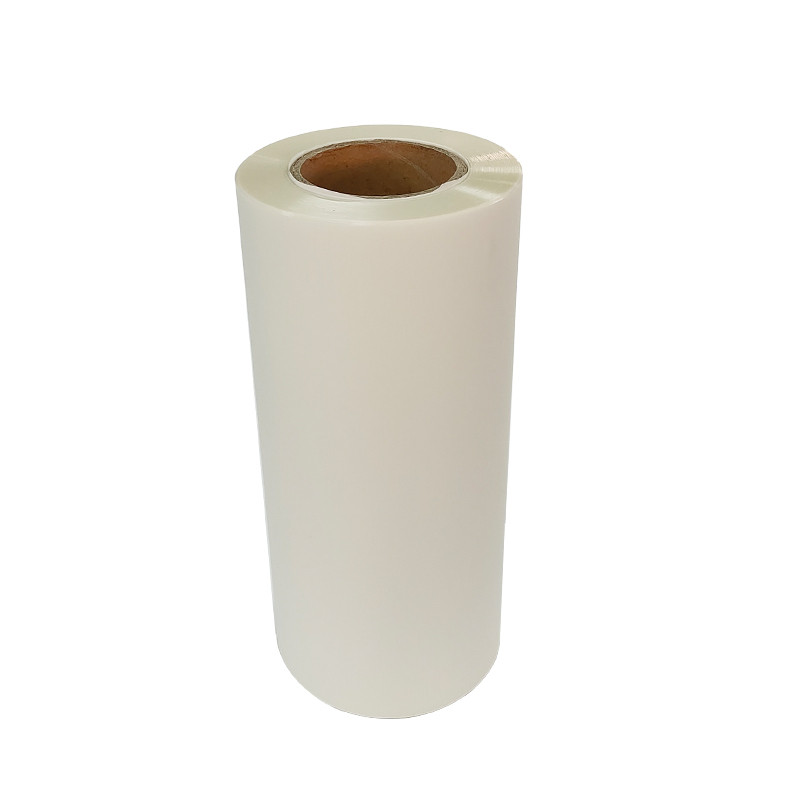
FCOLOR DTF film roll, engineered for hot-fix rhinestone compatibility
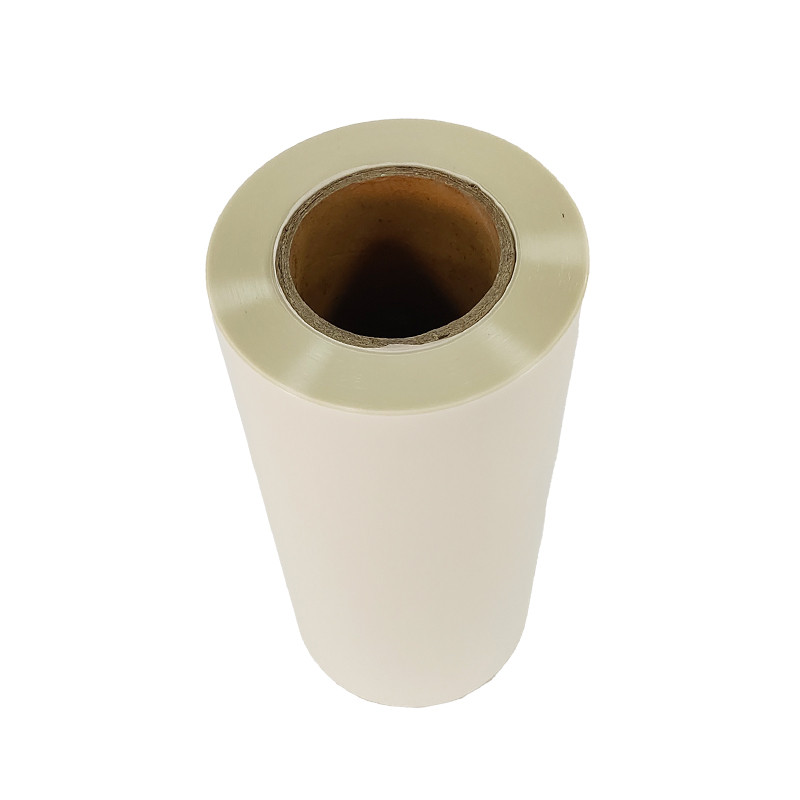
Surface texture of the new DTF film, designed to anchor rhinestone adhesive
The Rhinestone Adhesion Problem: Why FCOLOR Developed a Specialized DTF Film
Hot-fix rhinestones rely on a heat-activated adhesive on their flat back. When you press a rhinestone at 150 to 165 degrees Celsius, that adhesive melts and sinks into the fibers of the fabric below. The bond works because the adhesive grabs onto the physical structure of woven or knitted textiles. That is why rhinestones hold tight on cotton, polyester, and blends when applied directly.
The trouble starts when the rhinestone lands on top of a DTF-transferred pattern. A standard DTF transfer leaves a thin layer of ink and hot-melt adhesive powder bonded to the fabric surface. That layer creates a smooth, relatively non-porous film over the textile fibers. When rhinestone adhesive melts against that ink-and-powder layer instead of against raw fabric, it has nothing to grip. The bond becomes surface-to-surface instead of surface-to-fiber. One trip through the washing machine, and the stones peel off the printed area while remaining stuck on the surrounding bare fabric.
Rhinestone adhesive needs a porous surface to penetrate and lock into. Standard DTF transfer ink layers fill in the fabric weave, creating a barrier that prevents proper adhesive anchoring. The problem is not the rhinestone quality or the heat press temperature. It is the film.
FCOLOR's R and D team identified this gap after hearing consistent feedback from decoration shops that mixed DTF printing with rhinestone work. Customers reported that logos printed on DTF film and then decorated with rhinestones looked great coming off the heat press but lost stones within five to ten washes. The stones on bare fabric held fine. The stones on the printed area failed every time. Instead of telling customers to avoid combining the two processes, FCOLOR developed a DTF film whose transferred pattern accepts rhinestone adhesive the way raw fabric does.
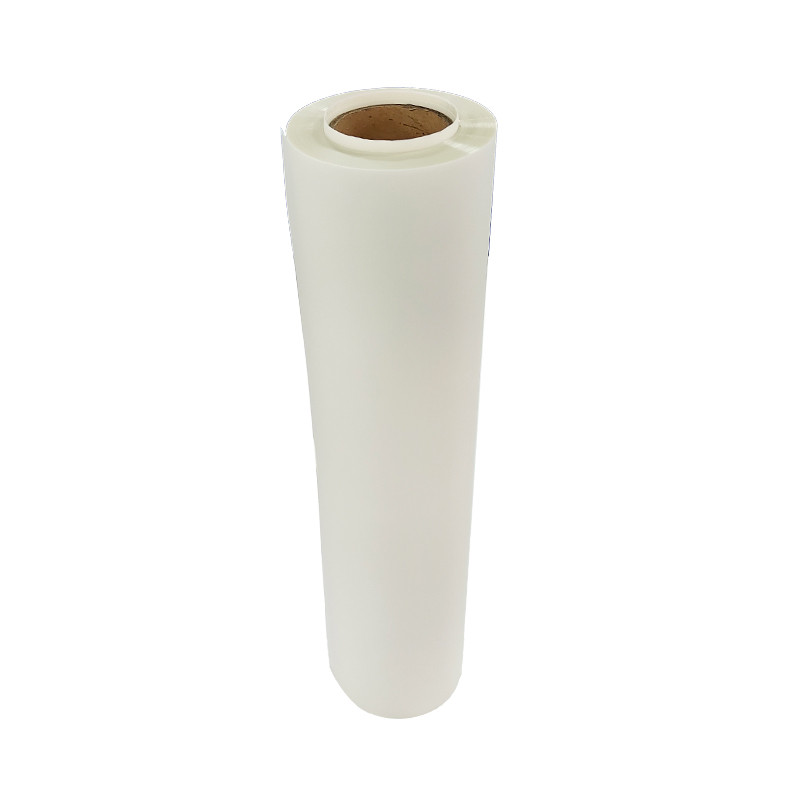
Single-sided DTF film roll from FCOLOR

Double-sided DTF film variant for dual-sided printing workflows
How FCOLOR DTF Film Locks Rhinestones onto Transferred Patterns
The difference between standard DTF film and FCOLOR's rhinestone-compatible version comes down to surface structure. After the transfer is complete and the film is peeled away, the ink and adhesive layer left on the fabric has a modified texture. FCOLOR adjusted the release layer formulation so that the transferred pattern retains a micro-roughened surface instead of the smooth, glossy finish typical of standard DTF transfers. That micro-roughness gives rhinestone adhesive something physical to grab onto.
Modified Release Layer
The film's release coating is reformulated so the transferred ink layer cures with a micro-textured surface instead of a glass-smooth one. Rhinestone adhesive penetrates the texture and forms a mechanical bond similar to what it achieves on bare fabric.
Controlled Ink Reception
The film's printing surface accepts DTF ink at the same quality level as standard film, so color vibrancy and detail resolution stay identical. The modification only affects how the transferred layer behaves after peel-off, not how ink lays down during printing.
Adhesive Compatibility
The transferred surface works with both hot-fix rhinestone adhesive and cold-applied fabric glues. Shops using E6000 or similar adhesives for delicate or thick DTF designs also report better long-term hold on the new film compared to standard transfer film.
Wash Cycle Durability
Rhinestones applied to FCOLOR DTF film transferred patterns survive 25-plus wash cycles in independent testing, compared to 5 to 10 cycles on standard DTF transfers before stone loss begins. The mechanical bond holds up under detergent exposure and machine agitation.
Here is how the two films compare in a real production scenario. A decoration shop prints the same logo on standard DTF film and on FCOLOR rhinestone-compatible film, transfers both to identical cotton t-shirts, applies the same batch of hot-fix rhinestones to the same positions on each design, and runs both shirts through 20 wash cycles. On the standard film shirt, roughly 60 percent of the stones on the printed area are gone by cycle 15. On the FCOLOR film shirt, all stones remain in place through cycle 20 and beyond.
| Performance Factor | Standard DTF Film | FCOLOR Rhinestone-Compatible DTF Film |
|---|---|---|
| Transferred surface texture | Smooth, glossy | Micro-roughened, matte |
| Rhinestone adhesive bond type | Surface adhesion only | Mechanical interlock |
| Stone retention after 10 washes | 40 to 60 percent loss on printed area | 100 percent retention |
| Stone retention after 20 washes | 70 to 90 percent loss | 95-plus percent retention |
| Compatible rhinestone types | Hot-fix only, with poor hold | Hot-fix and cold-glue, both with strong hold |
| Color and detail quality | Standard DTF quality | Identical to standard DTF quality |
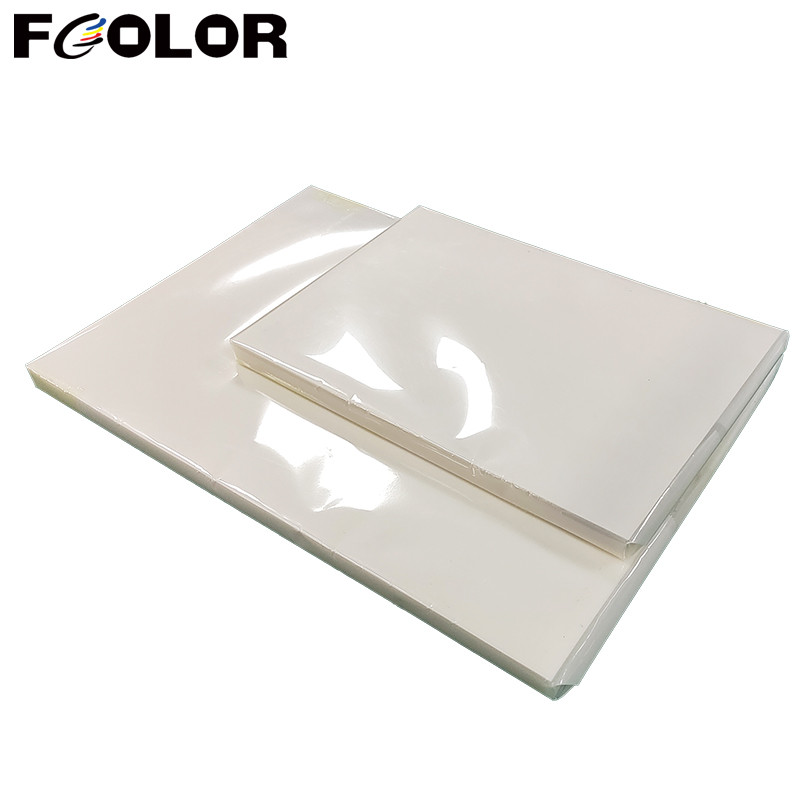
A3 and A4 sheet-cut DTF film from FCOLOR
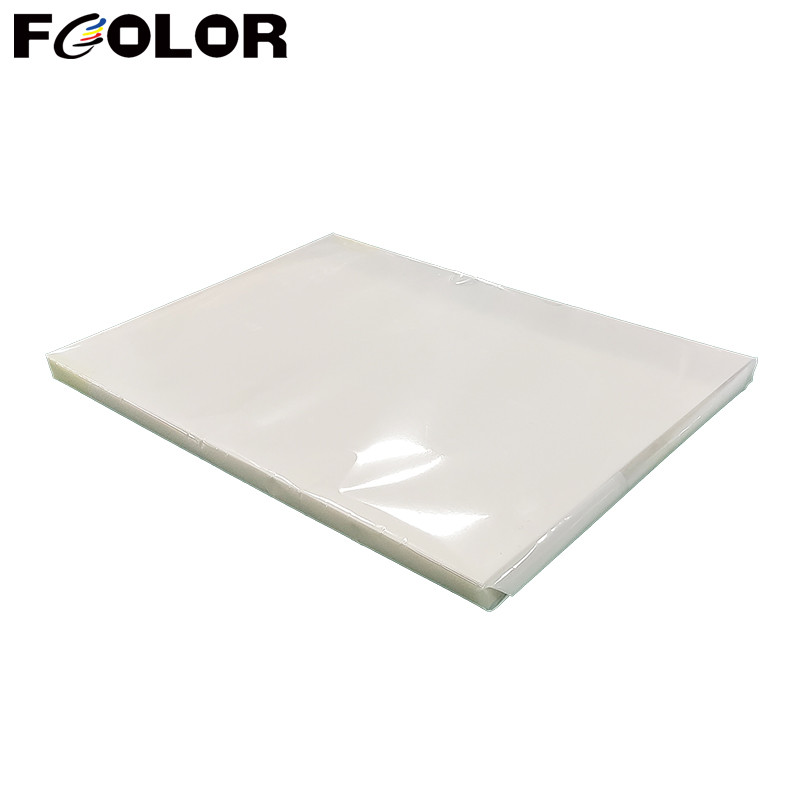
Sheet-cut format for smaller batch and sample production
FCOLOR DTF Film in Production: Application Process and Quality Standards
Switching to the rhinestone-compatible DTF film does not change the printing or transfer workflow. Print the design on the film using the same DTF printer, apply hot-melt adhesive powder, melt and cure the powder, and heat-press the transfer onto the garment. The only difference shows up after the film is peeled: the transferred pattern has a matte, slightly textured surface that accepts rhinestones without any additional surface treatment.
Step-by-Step: DTF Print Plus Rhinestone in One Workflow
Load the film into the DTF printer the same way as standard film. Print the design in mirror orientation. Ink absorption and color reproduction match standard film performance, so no profile adjustments are needed.
Apply DTF adhesive powder evenly across the wet ink, remove excess, and melt the powder in an oven or powder shaker at 120 to 140 degrees Celsius until it turns transparent. The curing behavior is identical to standard film.
Press at 150 to 160 degrees Celsius for 10 to 15 seconds with medium pressure on cotton or poly-cotton blends. Peel the film according to the film's peel specification, warm or cold. The transferred pattern will have a matte finish.
Place hot-fix rhinestones on the desired positions over the transferred pattern. Cover with Teflon sheet. Press at 150 to 165 degrees Celsius for 12 to 15 seconds with medium-firm pressure. Allow to cool before handling. The stones will bond to the transferred surface with a mechanical interlock.
Cover the decorated area with Teflon and press for 5 additional seconds. This step sets the rhinestone adhesive fully into the micro-textured transfer surface and ensures maximum wash durability.
The workflow above produces a finished garment where rhinestones sit on top of a full-color DTF-printed logo and stay there. On standard film, the same workflow produces a garment that looks identical on day one but starts losing stones within the first few washes. The film is the only variable that changes.
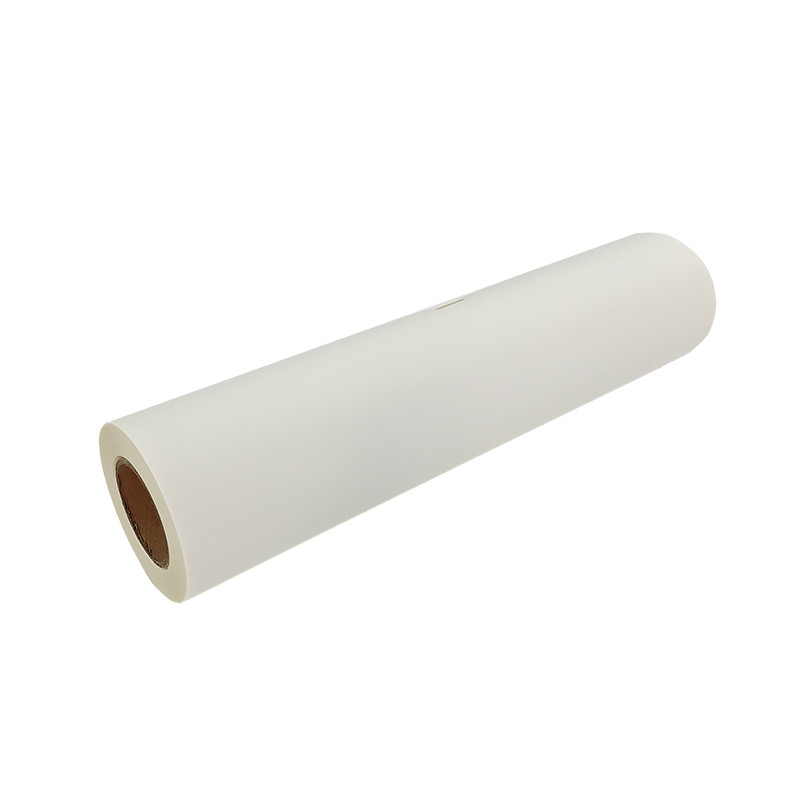
FCOLOR DTF film roll, available in multiple widths
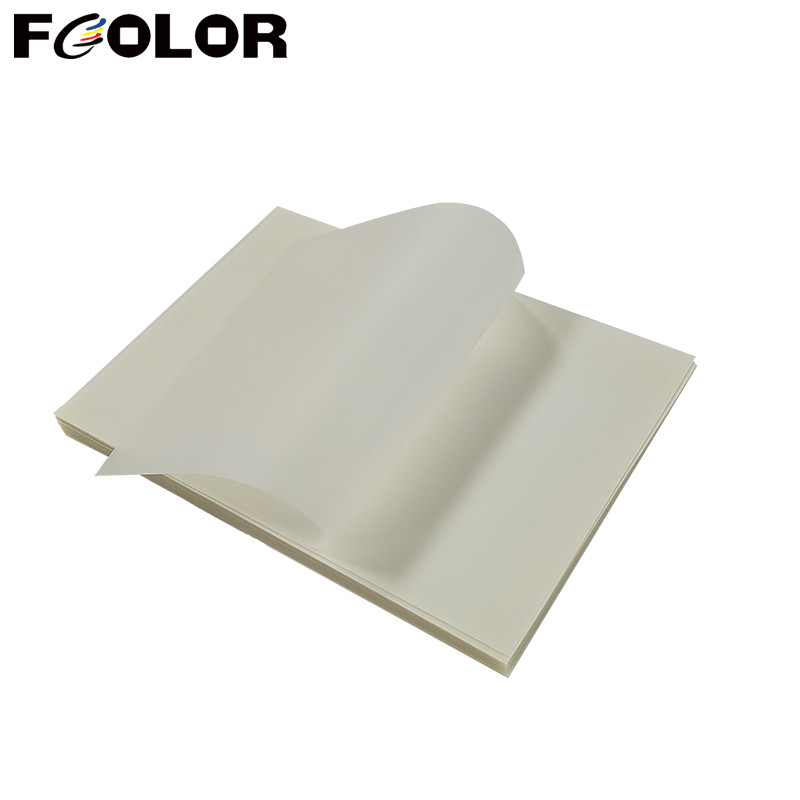
A4 sheet-pack format for short-run and sampling use
Quality Standards and Manufacturing Control
FCOLOR manufactures the rhinestone-compatible DTF film under the same ISO and CE certified production system that covers the company's full DTF consumable line. Each batch goes through three checkpoints relevant to the rhinestone application:
Release Layer Consistency
The micro-roughened release coating is applied at a controlled thickness measured by optical profilometry. Batches that fall outside the surface-roughness specification are rejected before packaging. This ensures every roll produces the same rhinestone-compatible surface after transfer.
Ink Absorption Testing
Every production batch is test-printed on a DTF printer using CMYK and white ink. Color density, dot gain, and drying behavior are compared against the baseline standard. Only batches matching standard film print quality ship to customers.
Wash Test Verification
Sample transfers from each batch receive hot-fix rhinestones and go through 20 machine wash cycles at 40 degrees Celsius. Rhinestone retention must reach 95 percent or higher for the batch to pass. This is the test that standard film fails at the 5 to 10 cycle mark.
The rhinestone-compatible DTF film is available in roll format (compatible with i3200, XP600, and other common DTF print heads) and sheet format (A3 and A4 for manual-feed and sampling workflows). The film works with all standard DTF inks and hot-melt adhesive powders. No special ink or powder is required.
Who Benefits from This Film
Boutique Apparel Decorators
Shops that produce custom fashion pieces combining printed graphics with rhinestone accents can now run both decorations on the same design area without the stones falling off after washing. Bridal party shirts, event merchandise, and fashion-forward pieces with rhinestone-outlined DTF prints are the primary use case.
Corporate and Promotional Goods
Companies ordering branded apparel with logos that combine DTF-printed color areas and rhinestone accents get a product that survives repeated washing in commercial laundry settings. The film eliminates the callback risk of stones falling off logo areas.
Small-Batch Customizers
A3 and A4 sheet formats let small shops and home-based decorators produce single-piece DTF-plus-rhinestone designs without investing in roll-fed equipment. The film behaves identically to standard DTF film in manual-feed printers.
FAQ
Does the new FCOLOR DTF film cost more than standard DTF film?
The rhinestone-compatible formulation uses a modified release layer, so pricing is slightly higher than standard film. For shops that already combine DTF printing with rhinestone work, the elimination of rework and customer returns offsets the difference quickly.
Can I use this film if I do not apply rhinestones?
Yes. The film prints and transfers identically to standard DTF film. The matte finish after transfer is the only visible difference. Some decorators prefer the matte look over the glossy finish of standard film even for non-rhinestone designs.
What rhinestone sizes work best on this film?
SS6 (2 mm) through SS30 (6 to 7 mm) hot-fix rhinestones all bond effectively. Smaller stones benefit most from the micro-textured surface because they have less adhesive surface area. Larger stones also hold well because the mechanical interlock compensates for the greater mass.
Does the film work on all fabric types?
The film transfers to the same range of fabrics as standard DTF film: cotton, polyester, cotton-poly blends, nylon, and some coated fabrics. For rhinestone application, cotton and cotton-poly blends give the best overall results because the fabric itself also contributes to rhinestone adhesion.
FCOLOR manufactures DTF printing equipment and consumables including DTF printers, DTF ink, DTF film, DTF powder, DTF ovens, and DTF powder shakers. The rhinestone-compatible DTF film is the latest addition to the DTF film product line, developed in response to real production feedback from decoration shops combining DTF printing with rhinestone application. For specifications, sample requests, or volume pricing, contact FCOLOR directly.
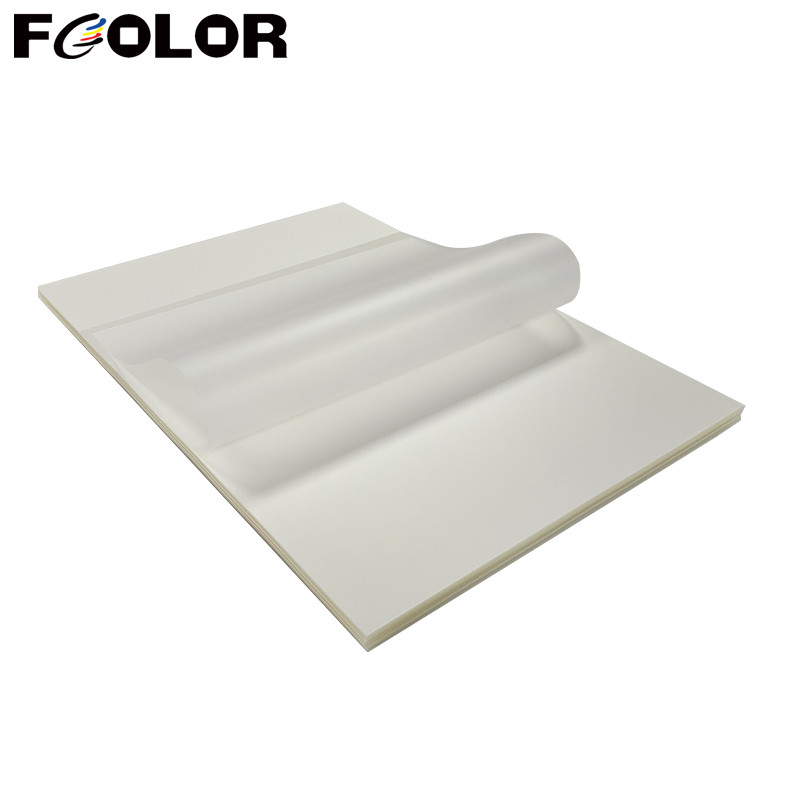
A4 DTF film sheets, ready for manual-feed printers
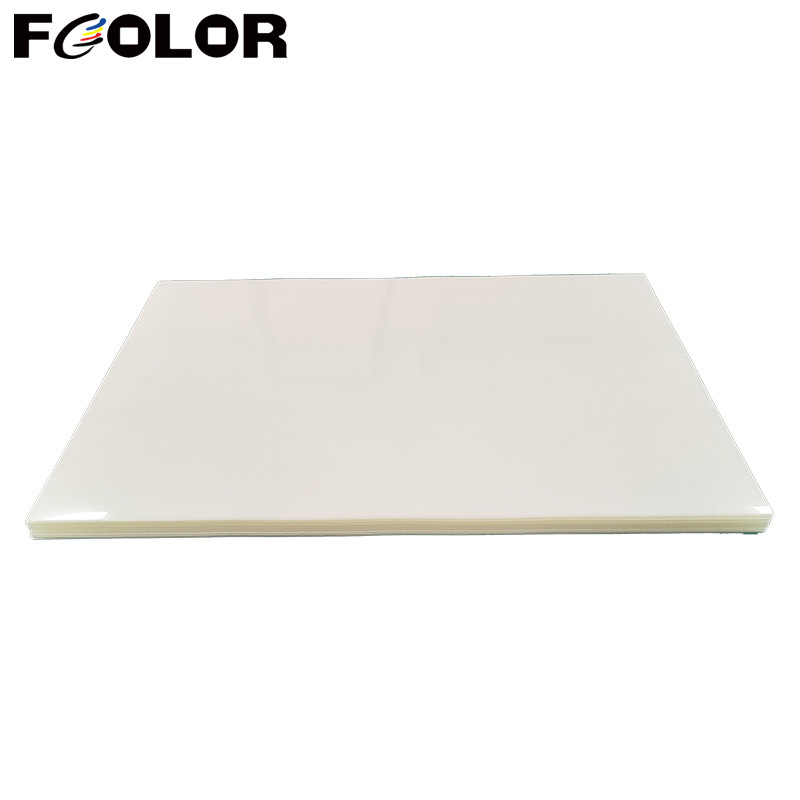
Film surface detail showing print-side coating