DTF Film and Hot Melt Powder: Three Consumable Failures
- Share
- publisher
- FCOLOR
- Issue Time
- Nov 19,2026
Summary
Three DTF film and powder failures with the setting behind each: powder clinging to clear margins from a tacky coating above 60% RH, static charge, a cold platen and a weak beater; fine-line starvation where 120-200 micron grains cannot seat in a 0.3 mm stroke and the ink skins over after 15 seconds; and release failures from peeling a cold peel film hot. Includes the evidence pack, the 45-55% RH band, ground resistance under 4 ohm, mesh selection by detail, and the 3-8 second drop window.
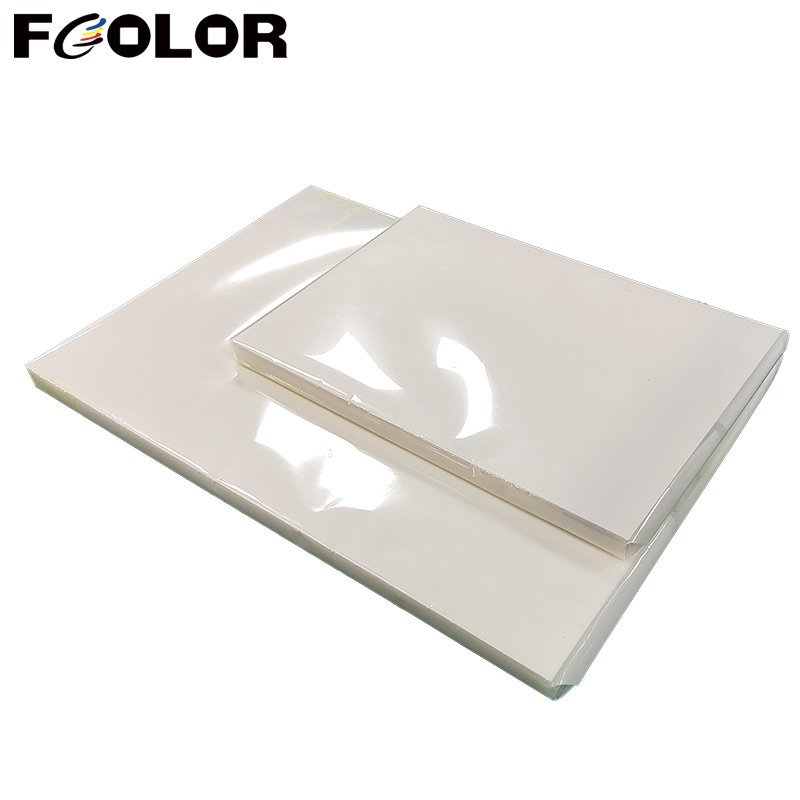
In DTF printing, the carrier PET film and the TPU hot melt powder are the physical backbone of the transfer. The printhead decides resolution, but the film’s release coating and the powder’s melt behaviour decide whether that graphic actually lands on the garment — or arrives speckled, patchy, or torn.
Three consumable failures come up again and again on roll-to-roll and sheet-fed lines: powder clinging to clear margins, fine detail failing to catch powder, and release failures at the press. None of them is random, and each one is measurable before you discard a roll.
What Evidence to Send Before You Blame the DTF Film
Powder and release complaints are argued about more than most, because the roll left the factory looking correct and the defect only appears downstream. These five items let an engineer separate a film coating problem from a shaker setting from ambient humidity — before anyone adjusts tension or scraps stock.
| # | Evidence | What it decides |
|---|---|---|
| 1 | Un-melted web macro — high-resolution photo plus 10 seconds of video of the film leaving the shaker vibration box, before it enters the heating tunnel | Whether excess powder actually falls off the clear, unprinted areas |
| 2 | Cured adhesive melt texture — macro shot of the cured adhesive layer under raking light | Continuous semi-gloss orange-peel texture means fully melted; dull sandy granules mean it never coalesced |
| 3 | Fine detail macro — 10x magnification of micro-lines and small type below 0.5 mm | Whether powder granules are physically seated on the ink edge or just resting nearby |
| 4 | Peel test video — one continuous clip showing press temperature readout, dwell countdown, and the peeling action itself | Whether the peel was executed hot, warm or cold — the single most misreported detail in warranty claims |
| 5 | Workshop climate readings — verified digital hygrometer data at the printer platen, the shaker bed and the film storage rack | Humidity at three locations can differ by 15% RH inside one room, and each one drives a different defect |
Why Powder Sticks to Clear Margins on DTF Film
Symptoms
After the shaker beater bars, residual grains cling to clear film borders, the counters inside letters, and negative-space voids. Press those onto white or pastel garments and the stray adhesive melts into yellowed speckles or dirty transparent stains — a halo the customer sees immediately and no amount of re-pressing removes.
| Root cause | Mechanism | Line countermeasure |
|---|---|---|
| Ambient humidity | Moisture softens the silica receptive coating until it is microscopically tacky | Dehumidify the room to 45–55% RH |
| Electrostatic charge | Triboelectric build-up traps dry TPU dust on clear areas | Verified earth ground plus ionizer bars |
| Platen pre-heat too low | Wet ink mist drifts across clear film and catches airborne dust | Raise the front heater to 38–42 °C |
| Weak shaker vibration | Gravity alone cannot dislodge granules from voids | Increase beater motor frequency |
| Micro nozzle deflection | Invisible satellite droplets become anchor points for powder | Clean the wiper blade, verify nozzle alignment |
Root causes worth understanding
Humidity above 60–65% RH. DTF PET film carries a hydrophilic silica-alumina receptive coating — it is built to absorb aqueous ink vehicle. Above 60% RH that same coating starts absorbing moisture from the air, turns tacky under a microscope, and physically grips dry TPU grains.
This is worth stating clearly, because it looks like a contradiction of the usual advice. Dry air makes powder land unevenly on the print; damp air makes it cling where there is no print. Both are true, which is why the target is a band and not a direction: hold the workshop at 20–25 °C and 45–55% RH. If ambient humidity passes 60%, run dehumidifiers. Never park open rolls on bare concrete.
Triboelectric charge. Dry PET unwinding across rubber drive rollers and metal vacuum platens generates thousands of volts. Dry TPU particles behave as dielectric polar bodies and snap onto charged clear areas with visible force. Bond printer frame, shaker chassis and take-up stand to a verified earth rod — below 4 ohm — and mount copper tinsel or 7 kV AC ionizing bars directly above the film bridge between print exit and powder inlet.
Low platen pre-heat with slow beater speed. Below 35 °C on the front platen, volatile water mist from the print zone keeps drifting over the clear film. Set the front heater to 38–42 °C so carrier moisture flashes off before the web reaches the powder box, and raise shaker vibration 20–30% until the voids drop clean and sharp.
Sub-visual nozzle deflection. A partially deflected nozzle sprays satellite droplets into clear margins. Invisible on wet film, each droplet is an anchor. If margins are dirty in a repeating pattern, look at the head before you touch the shaker.
A film choice that removes the problem at the source. Dual-side treated PET film carries a permanent conductive antistatic release coating on the reverse face, which suppresses charge during high-speed unwinding. On lines running above 30 m/h, this usually settles the margin speckling without adding ionizer hardware.
Fine-Line Powder Starvation on DTF Film
Symptoms
Block text and solid fills catch powder normally and transfer cleanly. But fine script, serifs, barcode lines under 0.3 mm and feathered halftone edges come out with essentially zero adhesive coverage. After the first wash those details peel, flake, or disappear entirely — and the rest of the same print is still perfect.
| Checkpoint | Observed constraint | Corrective remedy |
|---|---|---|
| Powder mesh size | Coarse cut, 80–120 mesh, above 150 µm | Switch to fine, 120–200 mesh |
| Powder drop window | Print-to-powder transit longer than 15 seconds | Shorten the bridge dwell to 3–8 seconds |
| White ink laydown | Thin white pass skins over before powder arrives | Boost white choke to 85–95% |
| Vacuum platen airflow | Strong vacuum accelerates surface drying | Reduce suction platen fan speed |
Why fine detail behaves differently
Particle size versus line width. Standard commercial powder is distributed around 80–120 mesh, roughly 120–200 µm per grain. A typography stroke narrower than 0.3 mm is physically smaller than the grain meant to sit in it. No amount of shaker tuning fixes a geometry mismatch.
Premature ink skinning. Fine droplets hold very little liquid. If the bridge between printhead pass and powder cascade exceeds 15–20 seconds, or the front platen runs above 45 °C, a micro-line skins over with a dry polymer crust and loses its capillary tack before a single grain arrives.
Insufficient white cushion. Fine vector strokes printed under 60% white coverage simply do not carry the fluid volume needed to wet and encapsulate adhesive grains.
What to change, in order
- Match mesh to detail. Above 1 mm typography and solid athletic graphics run fine on medium TPU powder, 80–170 mesh (80–150 µm). For photographic halftones, neck labels and text under 0.3 mm, move to ultra-fine TPU powder, 120–200 mesh (60–100 µm).
- Enforce a 3–8 second drop window. Adjust bridge distance and platen vacuum so wet ink reaches the cascade inside 3 to 8 seconds. Never let a fine-line job sit on a heated platen while the operator takes a call.
- Raise white choke, keep the outline tight. In RIP, lift spot white underbase on vector linework to 85–95% while holding a 1–2 pixel choke so the white does not bloom past the colour edge.
- Turn the vacuum down, not up. Higher suction pulls solvent out of thin deposits faster and shortens the window you are trying to protect.
Ink Pooling and Beading on the DTF Film Surface
When ink beads, puddles or drips on the film instead of sitting in a flat deposit, the receptive coating has been asked to swallow more liquid than it can hold. Three things push it past that limit.
Coating saturation from ink limits set too high. Dark colours on high-coverage artwork often exceed what a single-side coated film can absorb. Cutting dark-colour ink limits by 20–35% usually resolves pooling without a visible density loss, because pigment optical density and liquid volume are not the same lever.
Humidity and damp stock. Film that has absorbed moisture from the room cannot take up ink vehicle at its rated capacity. Sealed foil bags with desiccant, opened only when the roll goes on the machine, are the cheapest insurance on the line. A roll that has sat open in a humid room for a week behaves like a different product.
Coating load versus application. Where artwork is consistently heavy — large solid blacks, dense photographic fields — a high-load double-coated PET film gives the coating enough capacity to hold the deposit flat rather than pushing the operator into permanent ink-limit compromises.
Cold Peel vs Hot Peel: DTF Film Release Diagnostics
Three ways release fails
- Hot peel failure — the ink splits down the middle, colour stays on the garment, half the white underbase stays welded to the carrier.
- Cold peel tearing — the release coating locks onto the ink film, and the pull stretches the graphic out of shape or tears chunks out of the fabric.
- Coating delamination — white flakes or hazy residue from the release layer remain on the finished shirt after peeling.
| Parameter | Hot peel | Cold peel |
|---|---|---|
| Peel timing | 2–5 seconds after clamp release | Full cool-down to room temperature |
| Platen temperature | 150–160 °C | 145–155 °C |
| Dwell time | 10–12 seconds | 12–15 seconds |
| Pressure | Medium-firm, 4–5 kg | Medium, 3–4 kg |
| Peel motion | Rapid, smooth 180° continuous pull | Flat, low-angle steady pull |
Why the peel timing numbers differ by film
Hot peel and cold peel films use entirely different release chemistries. Hot peel relies on a thermal wax coating that liquefies under heat. Cold peel uses silicone-modified synthetic resins that need to crystallise as they cool before they let go. Peel a cold peel film hot and you are pulling molten ink apart — the failure looks like bad ink when it is simply the wrong moment.
On that point, a clarification our earlier film guide does not spell out: many shops do peel cold peel film after 5–10 seconds and get away with it on thin deposits. That works because the layer is thin enough to set fast. On heavy white laydown and large solid areas, the release resin has not finished crystallising at 10 seconds, and that is exactly when tearing appears. Treat full cool-down below 30 °C as the specification and the 5–10 second peel as the shortcut that only survives light coverage.
Thermal abuse scorches the release layer. Holding a press above 175 °C or longer than 20 seconds cross-links the release wax into the ink polymer. From that point no peel technique recovers the print, and the film gets blamed for a press setting.
Under-melted powder. If the TPU was not fully melted in the shaker oven, adhesion to the cotton fibre never forms, and the mechanical bond to the PET carrier wins the tug of war. Check the cured texture — item 2 in the evidence pack — before changing press settings.
Press settings and the finish press
Set flatbed pneumatic or manual presses to 150–160 °C for 12–15 seconds at 4–5 bar. Our published baseline of 160 °C for 15 seconds sits at the top of that band, which is why it works across the widest range of fabrics; drop toward 150 °C only for heat-sensitive blends.
Then do the step most shops skip: cover the freshly peeled graphic with silicone parchment or a Teflon sheet and press a second time for 5 seconds. This flattens edge boundaries, removes the last of the orange-peel relief, and locks wash fastness. It is also the cheapest way to make a marginal peel look deliberate.
DTF Film Powder and Release Summary Matrix
| Problem | Symptom | Root cause | Corrective action |
|---|---|---|---|
| Clear margins | Powder stuck in voids and letter counters | Humidity above 60% RH, static charge, platen pre-heat too low | Dehumidify to 45–55% RH; ground the chassis below 4 ohm; front heater 38–42 °C; dual-side antistatic film |
| Fine linework | Text under 0.3 mm and serifs with no powder | Coarse mesh, transit over 15 s causing skinning, low white laydown | 120–200 mesh ultra-fine powder; drop within 3–8 s; white choke 85–95% |
| Ink pooling | Beading, puddling or dripping on the film | Coating saturation, high humidity, damp roll | Cut dark ink limits 20–35%; sealed foil bags with desiccant; high-load double-coated film |
| Carrier release | Film tearing the graphic or lifting ink off fabric | Cold peel film peeled hot, press above 175 °C, under-cured powder | Verify the film’s peel spec; cool fully before peeling cold peel; calibrate oven surface to 120–130 °C |
One pattern runs through all four rows: the defect is always visible before the garment is finished, and almost always attributed to the film. Margin speckling and fine-line starvation both show up the moment the web leaves the shaker. Pooling shows up on the platen. Release failure is the only one that hides until the press — and even there, the cured texture tells you whether to blame the oven or the peel.
About FCOLOR DTF Film and Powder
Dongguan Fcolor Digital Technology Co., Ltd. manufactures DTF PET film, TPU hot melt powder and textile inks at our own coating and converting facility in Humen, Dongguan. Because the film coating, the powder and the ink are formulated on the same line, the powder is matched to the moisture load the ink carries — which is the reason a matched consumable set behaves predictably when you change one variable.
- Engineered DTF PET film — instant hot peel, true cold peel and universal warm peel, in 30 cm, 60 cm and 120 cm rolls plus A3 and A4 sheets. Dual-side antistatic backing available.
- Industrial TPU hot melt powder — ultra-fine 120–200 mesh, fine 80–170 mesh and medium 80–120 mesh, formulated for soft hand feel, high elongation recovery and 60 °C commercial wash fastness.
- High-elastic DTF textile inks — micro-filtered aqueous pigment inks engineered for Epson i3200-A1, XP600 and 4720 platforms.