DTF Film Printer and Ink Compatibility: What Works and What to Avoid
- Share
- publisher
- FCOLOR
- Issue Time
- Sep 16,2026
Summary
Field-tested answers on DTF film compatibility: which EPSON printhead printers work, why DTF pigment ink is the only correct ink choice, and how to handle fluorescent, neon, and metallic DTF inks without fading or adhesion problems.
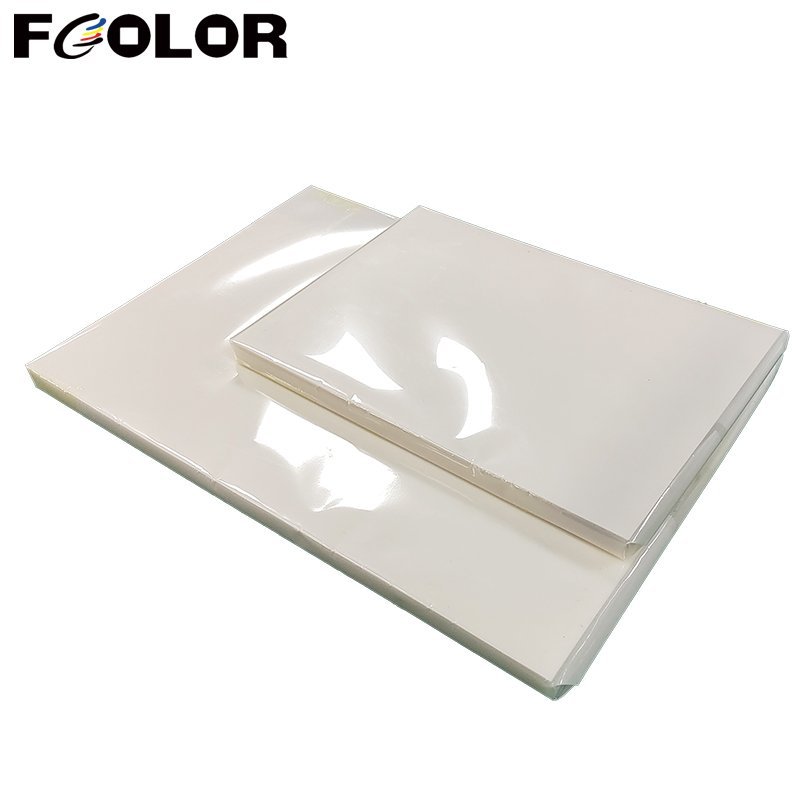
Buyers ask us two questions before anything else: will this film run in my printer, and which ink do I feed it? Get either one wrong and you are looking at clogged nozzles, weak color, or a print that washes off in the first laundry cycle. So here is the straight answer on DTF film printer compatibility, the ink our coating is built for, and whether specialty inks like fluorescent and metallic will work on the same roll.
Which Printers Are Compatible With DTF Film
Our DTF film works with all Epson-based DTF printers. That covers the common printheads shops actually run:
- XP600 — the workhorse for entry and mid-range DTF machines
- i3200 — the standard choice for higher-volume production lines
- 4720 — widely used in mid-tier roll-to-roll setups
- Other Epson printheads in the same family
If your machine is built around an Epson printhead, the film is not the variable you need to worry about. The film is a consumable carrier — the printer and its RIP settings decide how the ink lands on it.
One caveat worth stating honestly: if your machine uses a non-Epson printhead platform, tell us the exact model before ordering. We would rather confirm it fits than have you test a roll that was never meant for your head.
What Ink Is Suitable for DTF Film
DTF pigment ink only. This is not a preference, it is a requirement. DTF film coating is engineered for pigment ink — that is what bonds to the hot-melt powder and survives the transfer.
The detail that matters more than most people expect: use soft-flow white ink. White is the layer that sits directly on the film and carries the whole print through transfer. Standard white ink clogs more readily and lays down uneven density. Soft-flow white keeps the line flowing, reduces nozzle clogging, and gives you better color density in the final print.
If you are troubleshooting a weak-looking transfer, white ink is the first thing to check — before you touch press settings.
DTF Ink: Quick Reference
| Item | Recommendation | Why it matters |
|---|---|---|
| Ink type | DTF pigment ink | Bonds with hot-melt powder; other ink types do not transfer correctly |
| White ink | Soft-flow white | Avoids clogging, improves color density |
| Color ink | DTF pigment color ink | Standard pairing with the same coating |
| Not suitable | Dye, sublimation, UV ink | Different chemistry, will not work on DTF film |
Can DTF Film Handle Fluorescent, Neon and Metallic Inks
Yes. Our coating is compatible with fluorescent, neon and metallic DTF inks.
This is worth calling out because specialty inks are often the first thing to fail on generic film. Fluorescent and metallic pigments are physically heavier than standard color ink, and a coating that only handles standard ink can show patchy coverage or poor release when you switch to something brighter.
A practical note from the shop floor: when you move from standard color to fluorescent or metallic, run a small test print before committing a full production batch. Specialty pigments behave differently enough that your normal settings may need a small adjustment.
DTF Film Compatibility Checklist Before You Order
Four things to confirm before a first order:
- Printhead model — confirm it is Epson-based (XP600, i3200, 4720 or similar).
- Ink on hand — DTF pigment ink, with soft-flow white for the white channel.
- Film format — roll (30cm / 33cm / 60cm / 120cm) or A3 / A4 sheet, depending on your machine.
- Specialty ink plans — if you run fluorescent or metallic, mention it when ordering so we can confirm the roll matches.
About FCOLOR DTF Film and Ink
FCOLOR (Fullcolor) manufactures DTF PET film and DTF pigment ink at our own facility in Dongguan, China — cold peel and hot peel, single-sided and double-sided matte, in roll widths of 30cm, 33cm, 60cm and 120cm plus A3 and A4 sheets. Our film is compatible with our matching Fullcolor brand powder if you prefer a fully matched consumable set.
Every batch is tested for coating thickness, peeling performance and color reproduction before shipment.
Not sure whether your specific printhead or ink setup is a match? Tell us the printer model and the ink you are running — we will confirm compatibility before you buy, and you can verify it yourself with a free sample roll (you cover shipping).